

New Book Re-evaluates Pandit Deendayal Upadhyay’s Educational Thought and Its Real-World Legacy
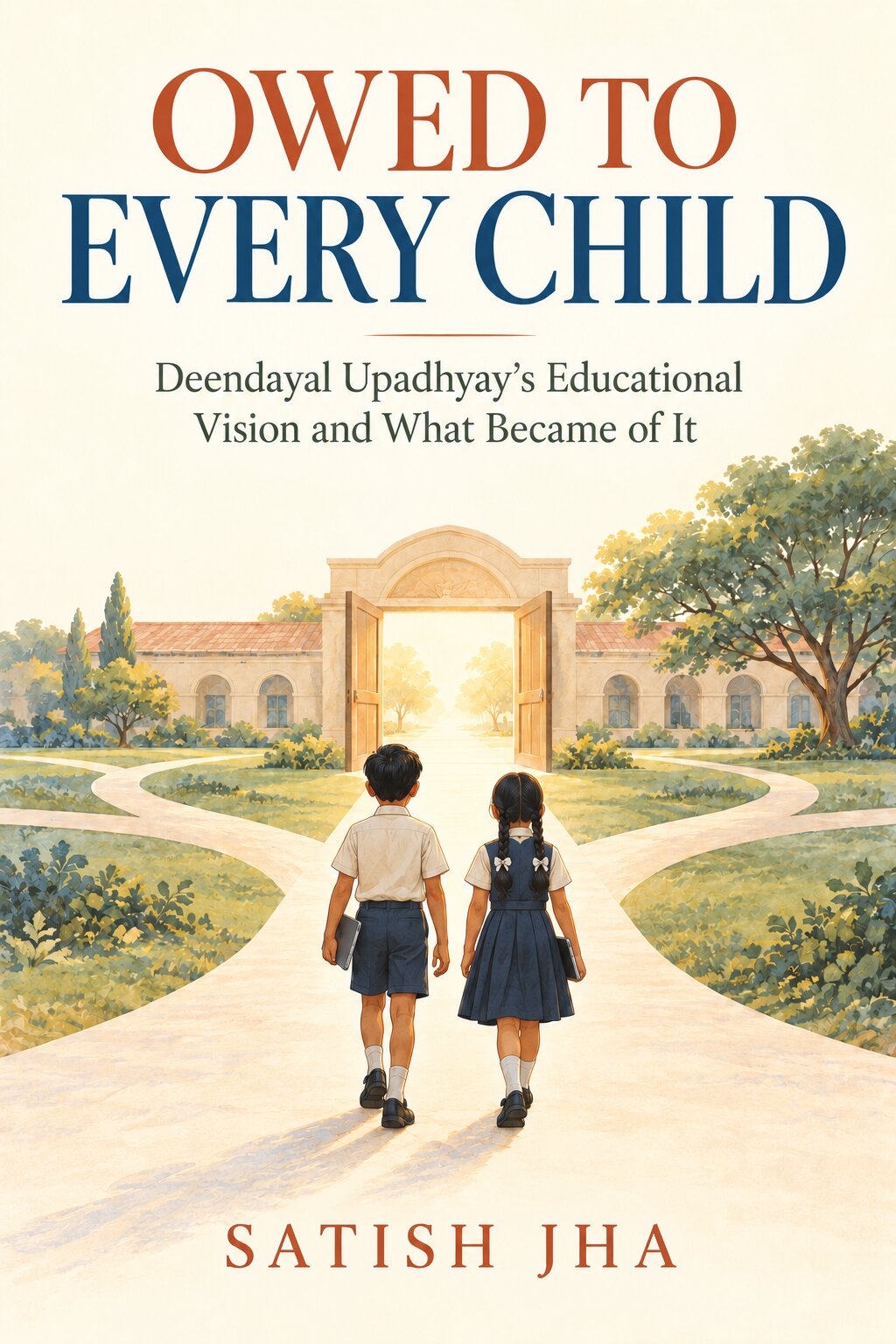
Owed to Every Child
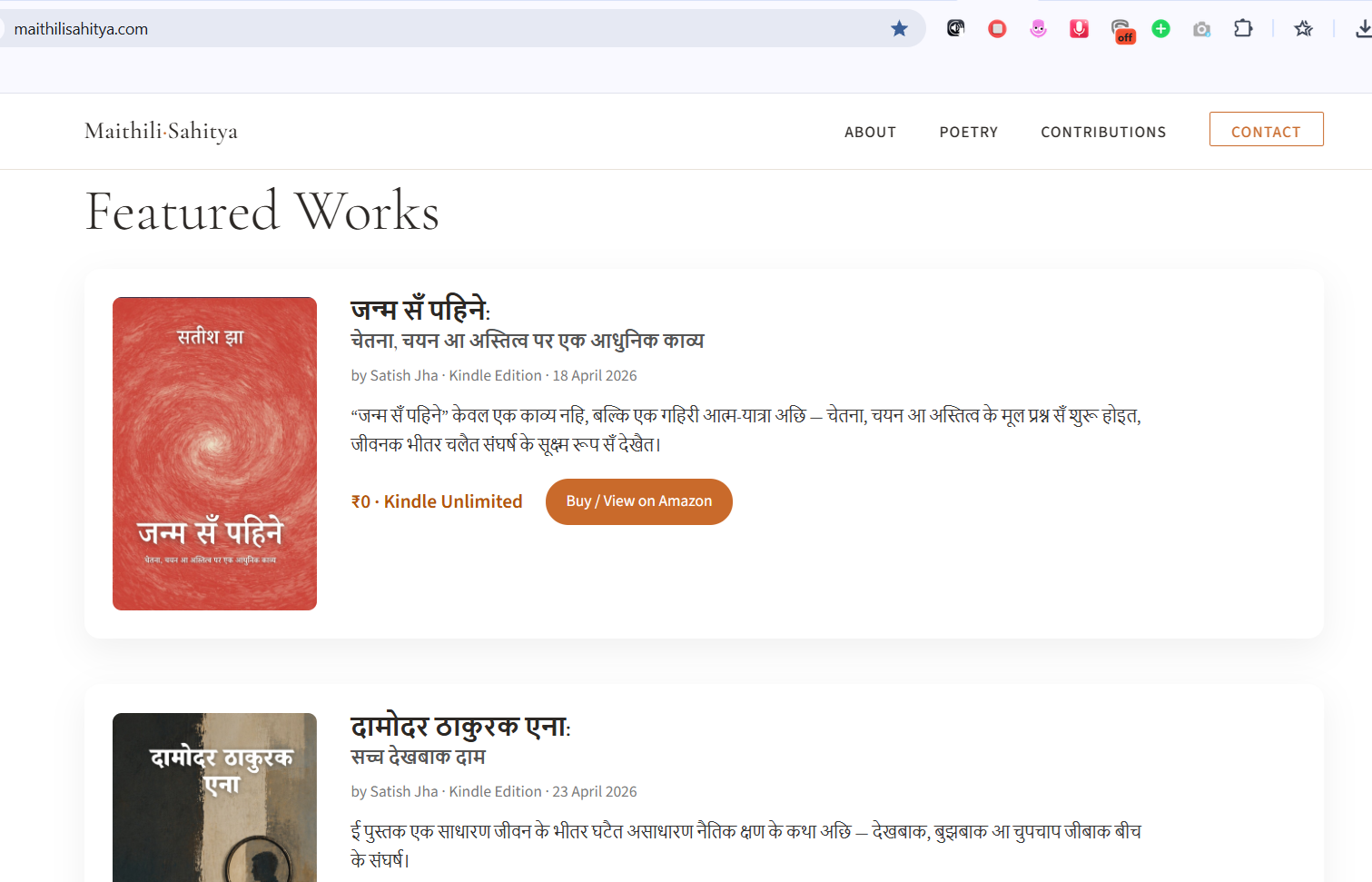
Maithili Sahitya Glipse

Books by Satish Jha - A glimpse
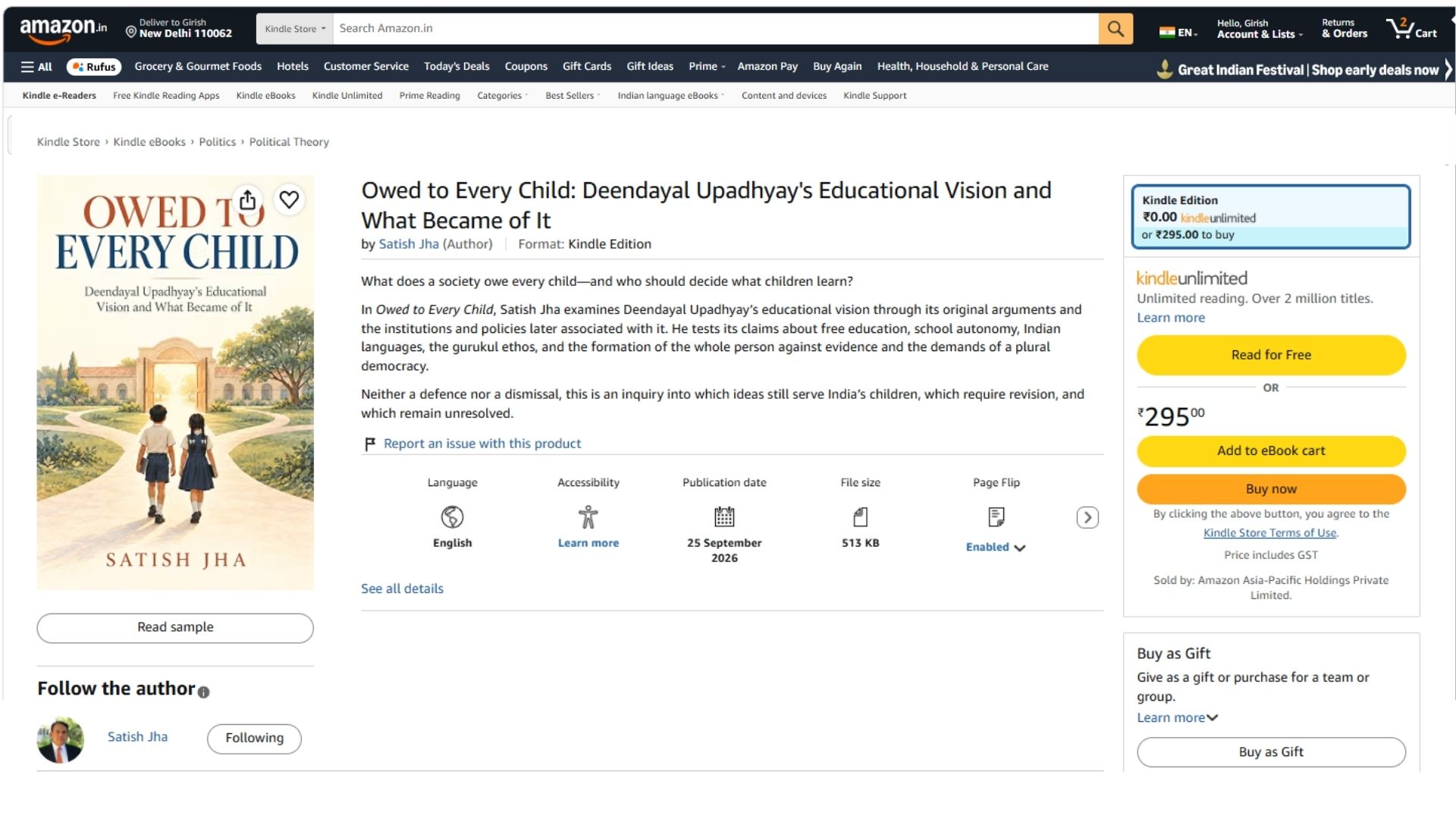
Owed to Every Child - on Amazon
The chapters test; the Epilogue judges. Readers can reject the verdict and still trust the tests.”
NEW DELHI, DELHI, INDIA, September 25, 2026 /EINPresswire.com/ -- In “Owed to Every Child: Deendayal Upadhyay’s Educational Vision and What Became of It,” author Satish Jha systematically tests the core claims, institutional models, and policy trajectories of Integral Humanism’s educational framework. — Satish Jha
As educational policy debates across India increasingly invoke the name of Pandit Deendayal Upadhyay, a major new analytical study cuts through decades of partisan speculation to rigorously evaluate his educational philosophy and its historical outcomes.
Authored by veteran journalist, education founder, and policy analyst Satish Jha, Owed to Every Child: Deendayal Upadhyay’s Educational Vision and What Became of It presents an independent, step-by-step examination of the principles set out in Upadhyay’s landmark 1965 Bombay lectures and Bharatiya Jana Sangh policy documents.
Rather than treating Upadhyay’s ideas as unquestionable doctrine or dismissing them out of hand, Owed to Every Child subjects every principal claim—from holistic anthropology and language policy to public finance, school governance, and the voluntary school movements—to empirical evidence, comparative benchmarks, and internal consistency checks.
Key Highlights & Findings from the Book:
The Integral Anthropology Holds as an Orienting Principle: Upadhyay’s vision of developing the whole person—body, mind, intellect, and soul—remains a defensible, widely shared educational goal, though the book corrects a long-standing historical misconception by clarifying that the term-by-term pairing of the four dimensions of the person with the four purusharthas was added by later commentators rather than Upadhyay himself.
Universal Free Education vs. Fiscal Reality: The framework’s foundational economic argument—that education is a social obligation that should be provided without fees—anticipates key constitutional developments such as the Right to Education Act. However, its realization has continuously foundered on a persistent fiscal deficit, as combined public education spending in India has hovered near 4% of GDP for decades rather than reaching the targeted 6%.
The Autonomy Paradox: Upadhyay’s proposal for public finance without state control (“free from government control, like the judiciary”) named a vital institutional design challenge. However, historical experience with grant-in-aid systems, teacher politics, and university administration shows that public finance without state oversight inevitably risks producer capture.
Language, Cognition, and the Market: While cognitive research strongly supports Upadhyay’s stance on early education in the child's home language, the book demonstrates that his policy of progressively displacing English fails to account for how families—particularly from disadvantaged communities—actively choose English as an indispensable tool for social and economic mobility.
Systemic Policy vs. Parallel Networks: The study corrects a common chronological misapprehension regarding the Vidya Bharati network, noting that the first Saraswati Shishu Mandir was founded in Gorakhpur in 1952—within Upadhyay’s lifetime. The difference between the Jana Sangh’s systemic proposals for state-financed public schools and Vidya Bharati’s voluntary network was therefore one of parallel strategy, not historical period.
Resemblance vs. Direct Descent: Comparing the framework against the National Policy on Education (1968) and the National Education Policy (2020), the book demonstrates that while shared post-independence concerns persist, claims that modern policies directly descend from Upadhyay do not hold, as his most distinctive positions (such as complete separation of finance from control and the progressive displacement of English) were not adopted.
A Grounded Epilogue on Governance
In a candid Epilogue written in the author’s own voice, Jha measures the trajectory of Indian education under governments that claim Upadhyay’s inheritance. The analysis argues that while recent policy texts endorse holistic learning and early mother-tongue instruction, actual state practice has overseen unprecedented centralisation, increased reliance on fee-charging private schools, persistent learning deficits in upper primary grades, and direct political control over academic institutions—resolving the framework's internal ambiguities toward central cultural direction at the expense of institutional autonomy.
"The measure of the framework is neither the reverence of those who claim it nor the suspicion of those who oppose them," writes Satish Jha. "It is how much of it can still bear weight after it has been tested... Education is owed to every child and should not depend on a family’s means. The state that pays for education should set standards and publish results, and leave the daily conduct of teaching to those whose work it is."
Owed to Every Child: Deendayal Upadhyay’s Educational Vision and What Became of It is essential reading for teachers, policy-makers, educational researchers, and anyone concerned with who decides what Indian children learn across generations.
About the Author
Satish Jha is an Indian editor, policy scholar, and educational entrepreneur. Educated at Jawaharlal Nehru University, The Fletcher School at Tufts University, and Harvard Kennedy School, he co-founded Jansatta within the Indian Express Group and edited Dinamaan for The Times of India Group. He served as President of One Laptop per Child India, founded the Ashraya Foundation, and serves as Chairman of Edufront Technologies. He is the author of The Full Plate and The Learning State.
Media & Ordering Inquiries:
For review copies, interview requests, or publication details, please contact media representatives or visit the publisher's portal.
Maithili Sahitya Prakashan
Mob: +91 99100 22922
email: ceoxef@gmail.com
Abbinav Gupta
Vidya Bharati Foundation of America
+1 202-286-2006
email us here
Visit us on social media:
LinkedIn
Legal Disclaimer:
EIN Presswire provides this news content "as is" without warranty of any kind. We do not accept any responsibility or liability for the accuracy, content, images, videos, licenses, completeness, legality, or reliability of the information contained in this article. If you have any complaints or copyright issues related to this article, kindly contact the author above.
